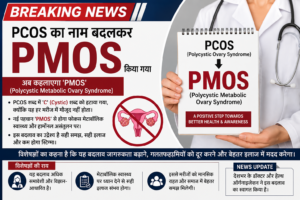
Women’s health issues have often been misunderstood, simplified, or ignored in public discussions. One such condition is PCOS, commonly known as Polycystic Ovary Syndrome, which affects millions of women worldwide. For years, people associated PCOS only with irregular periods or ovarian cysts, but medical experts have repeatedly highlighted that the condition is much more complex than that. Recently, the condition received a new name — PMOS (Polyendocrine Metabolic Ovarian Syndrome).
This change has sparked conversations across social media, healthcare platforms, and among young women themselves. While some people welcomed the new term, others were confused and questioned whether the disease itself had changed. In reality, the renaming reflects a broader understanding of the condition and its impact on the body.
PCOS, or Polycystic Ovary Syndrome, has long been recognized as one of the most common hormonal disorders affecting women of reproductive age. The condition is linked with irregular menstrual cycles, hormonal imbalance, weight gain, acne, excessive hair growth, fertility issues, and insulin resistance.
Despite the name, not every woman with PCOS develops ovarian cysts. Similarly, the condition affects more than just the ovaries. It influences the endocrine system, metabolism, mental health, and overall quality of life.
Many women struggle for years before receiving a diagnosis because symptoms are often ignored or misunderstood. Some women are advised to “lose weight” without proper medical investigation, while others normalize irregular periods due to lack of awareness.
The transition from PCOS to PMOS was introduced to better represent the actual nature of the disorder. According to researchers and healthcare professionals, the old term “Polycystic Ovary Syndrome” focused too heavily on ovarian cysts, even though cysts are not the defining feature for every patient.
The new term — Polyendocrine Metabolic Ovarian Syndrome (PMOS) — highlights three major aspects of the condition:
1. Endocrine Involvement
The condition is deeply connected to hormonal imbalance. Hormones such as insulin, androgens, estrogen, and progesterone are affected.
2. Metabolic Effects
Many women with the condition experience insulin resistance, difficulty managing weight, fatigue, inflammation, and increased risk of diabetes.
3. Ovarian Impact
Although ovarian issues remain important, they are now seen as one part of a much larger syndrome.
Experts believed that the new terminology would help people understand the condition beyond fertility problems alone.
More Than an Ovarian Disorder
One of the biggest criticisms of the old name was that it reduced a complex health issue to only reproductive health. In reality, the condition can influence:
* Mental health
* Skin and hair health
* Metabolism
* Energy levels
* Sleep quality
* Body image
* Emotional well-being
* Long-term health risks
Women living with the condition often report anxiety, stress, low self-esteem, and frustration due to delayed diagnosis or social stigma.
By changing the name to PMOS, medical experts hope that healthcare systems and society will take the condition more seriously as a full-body metabolic and endocrine disorder.
As soon as discussions about PMOS began circulating online, social media platforms became filled with mixed reactions.
Some women appreciated the change because they felt the new name was more scientifically accurate and validating. Others expressed confusion, wondering whether PMOS was a completely new disease.
Memes, jokes, and discussions quickly spread online, especially among young audiences. Many people joked about how difficult it would be to adjust from saying “PCOS” to “PMOS.” At the same time, health influencers and doctors used the trend to educate people about the actual symptoms and seriousness of the condition.
This reaction reflects the powerful role of digital media in shaping public understanding of medical information. Today, health news spreads faster through Instagram reels, YouTube videos, and online discussions than through traditional healthcare awareness campaigns.
The discussion around PMOS also shows how language and media influence public perception.
Medical terminology matters because names affect:
* Public understanding
* Awareness campaigns
* Social stigma
* Diagnosis and treatment conversations
* Emotional responses of patients
The older term “PCOS” often made people think the disorder was only about ovarian cysts or infertility. This limited understanding sometimes prevented people from recognizing metabolic symptoms or seeking timely medical support.
With the rise of digital media, health awareness has become more accessible. Young women today learn about hormonal disorders through:
* Instagram creators
* Health podcasts
* YouTube explainers
* Online support groups
* Health blogs
* Medical influencers
However, social media can also spread misinformation. Therefore, accurate reporting and responsible health communication are extremely important.
The shift from PCOS to PMOS is not merely about changing letters in a medical term. It represents a larger attempt to improve understanding, diagnosis, and treatment.
The new terminology may help:
* Reduce misconceptions
* Encourage earlier diagnosis
* Increase awareness about metabolic symptoms
* Improve doctor-patient communication
* Promote holistic treatment approaches
* Strengthen women’s health discussions
Many women feel relieved that the condition is finally being recognized as more than a reproductive issue.
Even though the new term has scientific importance, adapting to it may take time.
Challenges include:
* Public confusion
* Continued use of the older term
* Lack of awareness in rural areas
* Misinformation online
* Need for updated educational material
Doctors, educators, media professionals, and healthcare organizations will need to work together to spread accurate information
The transition from PCOS to PMOS reflects an evolving understanding of women’s health. The condition has always been more than ovarian cysts, and the new name attempts to acknowledge its hormonal, metabolic, and systemic impact.
Beyond the medical aspect, the conversation also highlights how language shapes awareness and how digital media influences public understanding of health issues. While the change may initially confuse some people, it also opens the door for deeper conversations about women’s health, diagnosis, and social awareness.
Ultimately, whether people call it PCOS or PMOS, the most important goal remains the same — better awareness, better healthcare, and better support for women living with the condition.
About The Author
