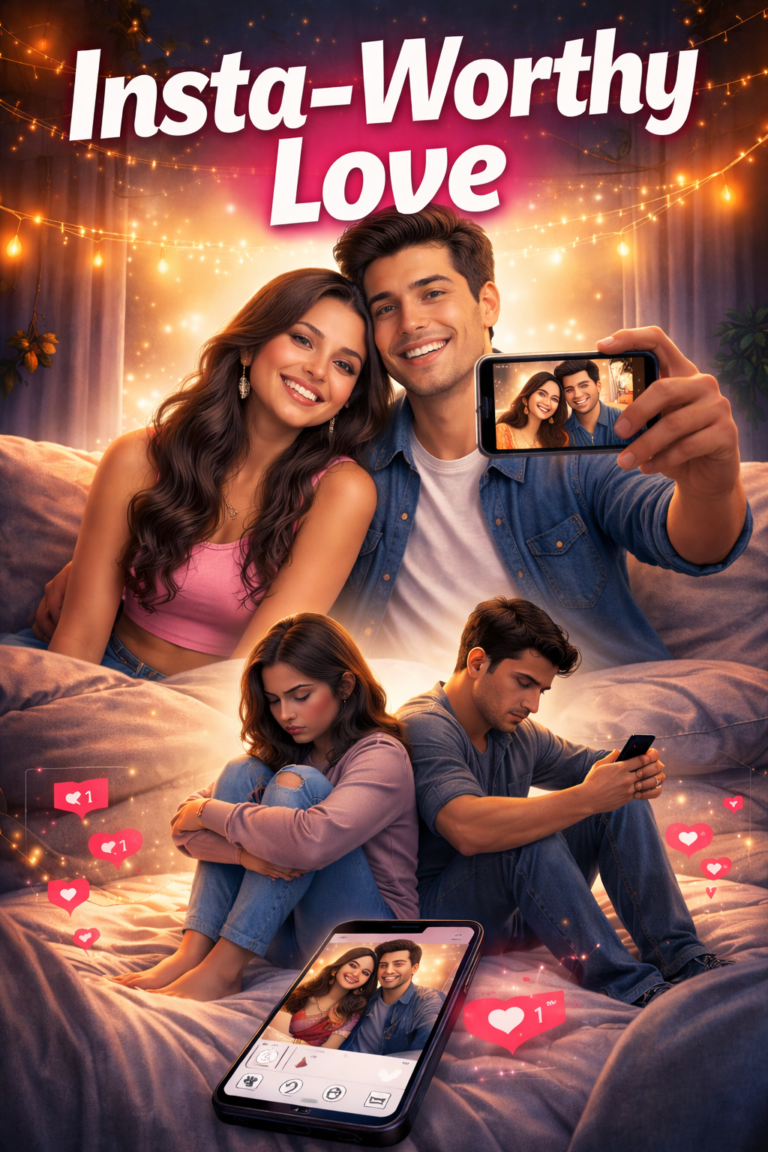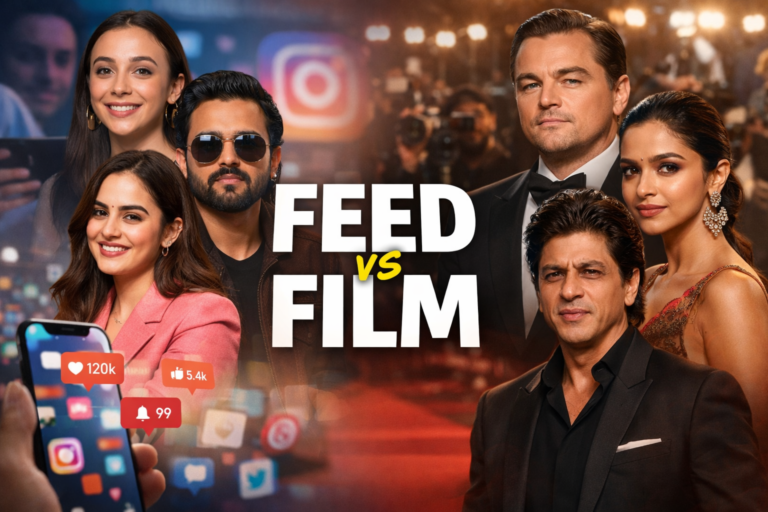



The battle for pop culture dominance is no longer happening on the big screen—it’s unfolding on your phone. From viral reels to blockbuster films, two forces are shaping what we watch, wear, and talk about: influencers and actors. But as scrolling replaces cinema and relatability replaces stardom, a sharper question emerges ,who actually decides what becomes “cool” today?
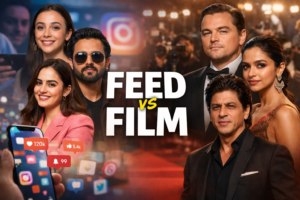
For decades, actors ruled this space. In India, stars like Shah Rukh Khan, Amitabh Bachchan, Rajinikanth didn’t just deliver films—they defined romance, fashion, and aspiration. A single pose or dialogue could become a nationwide trend. Similarly, Deepika Padukone, Aishwarya Rai, Sushmita Sen influenced everything from beauty standards to brand choices. Globally, actors like Leonardo DiCaprio, Angelina Jolie, Zendaya shaped conversations through films, red carpets, and carefully curated appearances. Their power came from rarity—you didn’t see them every day, and that made every appearance matter.
But today, influencers are rewriting the rules. Indian creators like Kusha Kapila and Bhuvan Bam command massive engagement through relatable, everyday content. Their influence feels immediate and personal. Globally, creators like Emma Chamberlain, Li Ziqi have built entire aesthetics and lifestyles that millions try to copy. They don’t wait for a Friday release—they trend daily.
The shift becomes even clearer in how trends are created. A dance step from a random reel can go viral overnight, while film songs now often rely on Instagram challenges to gain popularity. Brands, too, are adapting—choosing influencers for campaigns because they bring engagement, not just visibility. In many cases, an influencer’s recommendation feels more “real” than a celebrity endorsement.
Yet, actors still hold a different kind of power cultural depth. A film or a performance-driven role can spark conversations that last far beyond a trending reel. Actors bring storytelling, scale, and emotional connection that short-form content often cannot replace. That’s why even influencers aspire to enter films, while actors are trying to stay relevant through reels and podcasts.
What’s interesting is how both worlds are merging. Ranveer Singh’s high-energy social media presence feels almost influencer-like, while creators are now hosting shows, acting in web series, and attending the same events as film stars. Globally too, celebrities appear on podcasts and YouTube channels to seem more “real,” blurring the line between star and creator.
From the audience’s perspective, this shift is exciting but overwhelming. On one hand, it feels democratic—anyone can rise, anyone can influence. On the other, trends feel faster, shorter, and sometimes less meaningful. What stays viral today is often forgotten tomorrow.In the end, influencers may control attention, while actors still command impact. One dominates your screen time, the other shapes long-term memory.
So let me guess —who really controls your pop culture today: the stars you admire for years, or the creators who grab your attention for just 30 seconds?
About The Author