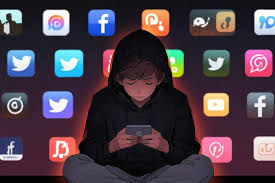
In today’s digital era, social media has become an inseparable part of everyday life, especially for young people. Platforms like Instagram, Facebook, YouTube, and Snapchat have transformed the way individuals communicate, learn, and entertain themselves. From sharing personal moments to staying updated with global trends, social media has created a virtual environment that strongly influences modern youth culture. While these platforms provide opportunities for creativity, communication, and education, excessive dependence on them has led to a growing concern known as social media addiction.
Young people today spend a significant amount of time scrolling through feeds, watching short videos, uploading content, and interacting online. What begins as casual usage often develops into a habit and gradually turns into dependency. The constant need to check notifications, receive likes, and remain active online creates a psychological attachment that can affect both personal and professional life. Social media addiction is not only a behavioral issue but also a social and emotional challenge affecting millions of young individuals worldwide.
One of the major reasons behind this addiction is the human desire for social acceptance and validation. Many young users measure their self-worth through followers, comments, and online popularity. Social media platforms are designed to encourage continuous engagement through features such as reels, stories, trending content, and instant notifications. These elements create excitement and temporary satisfaction, making users return repeatedly to their screens. In many cases, youth develop a fear of missing out, commonly known as FOMO, which pushes them to stay constantly connected with online activities and updates.
Another factor contributing to social media addiction is the easy availability of smartphones and affordable internet services. Social networking platforms are accessible anytime and anywhere, making it difficult for users to disconnect from the digital world. Peer influence also plays a major role, as young people often feel pressured to maintain an active online presence to fit into social groups and modern digital culture.
Despite its negative aspects, social media also offers several benefits when used responsibly. It allows students to access educational content, online courses, tutorials, and informative discussions. It helps people stay connected with friends and family regardless of distance and provides opportunities for creativity and self-expression. Many young individuals use digital platforms to showcase talents in photography, music, art, writing, and content creation. Social media has also become a powerful medium for spreading awareness, promoting social causes, and sharing important information globally.
However, excessive use of social media can lead to serious consequences. Mental health issues such as anxiety, stress, loneliness, depression, and low self-esteem are increasingly linked with prolonged screen time and online comparison. Many young people compare their appearance, achievements, and lifestyle with unrealistic images presented online, which negatively affects confidence and emotional stability. Social media addiction also impacts academic performance, as students often lose concentration and spend more time online than on studies or productive activities.
The addiction further affects physical health and lifestyle habits. Continuous screen exposure can disturb sleep patterns, reduce physical activity, and cause fatigue. Spending excessive hours online may also weaken real-life relationships, as face-to-face communication and emotional bonding gradually decrease. In addition, cyberbullying, online harassment, and digital pressure have become serious concerns that negatively impact the psychological well-being of youth.
The growing influence of social media on young minds has become a significant issue for families, educators, and society. The solution does not lie in completely avoiding social media, as it has become an important part of modern communication and learning. Instead, the focus should be on balanced and responsible usage. Setting screen-time limits, encouraging outdoor activities, promoting digital awareness, and maintaining healthy real-life interactions can help reduce dependency on social networking platforms.
Social media is a powerful tool that can either support growth or create dependency depending on how it is used. For today’s youth, maintaining a balance between the digital world and real life is essential. Responsible use of technology can help young individuals enjoy the benefits of social media without allowing it to control their mental health, relationships, and overall well-being.
About The Author
