





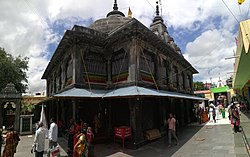
On the quiet, sandy banks of the Phalgu River—a river that often flows unseen beneath the surface—stands the ancient Vishnupad Temple, a place where mythology, memory, and mourning come together. Every year, thousands of pilgrims arrive here, for Pind Daan a vital Shraddha ritual performed to facilitate the journey of ancestral souls toward Moksha (liberation). The temple is believed to be built upon the site where Vishnu had purportedly killed the demon Gayasura or pinned him underground. The temple features a 40-cm footprint of Vishnu , known as Dharmasila which was retained when the Vishnu stepped on Gayasura’s chest before pinning him underground. Legend dictates that Lord Ram and Goddess Sita visited Gaya to perform the pind daan for his father, Dasharatha. The nearby pond called Sita Kund is where Sita is believed to have performed rituals for Dasharatha, as referenced in the Ramayana.
The significance of the Phalgu River adds a unique layer to this experience. Though it appears dry for most of the year, mythology says the river flows invisibly beneath the sand, symbolizing hidden faith and silent devotion. Pilgrims sit along its banks, offering prayers with a belief that goes beyond what the eye can see.
The temple’s history is as enduring as its beliefs. The present structure was rebuilt in the 18th century by Ahilyabai Holkar, a ruler known for restoring sacred sites across India. Constructed from solid granite, the temple stands strong with its simple yet powerful design. Before this, the site had older structures that faded over time, but its spiritual importance never diminished. Another significant element linked to the temple is Patharkatti village. Ahilyabai sent officers to find the best stone for the construction, they chose munger black stone in from Jaynagar.Since the mountains were far from Gaya, officers brought artisans from Rajasthan to a village called Patharkatti near Bathani in the Gaya district to carve the stones. The village is named after pathar (stone), reflecting its identity as a stone-carving hub. Patharkatti Stone Art was officially granted a Geographical Indication (GI) tag in 2025, providing recognition to its unique black granite carvings.
During the Pitru Paksha period, the temple transforms into a sea of devotion. Streets fill with pilgrims, chants echo through the air, and the banks of the Phalgu River come alive with rituals performed from dawn to dusk. Priests guide families through traditions that have been passed down for centuries, making the experience deeply personal and culturally rich.
About The Author